
Wilson County Probate Records
In North Carolina, the elected Clerk of Superior Court in each county acts as probate judge. For Wilson County, the probate court name resolved from the state structure map is the Clerk of Superior Court as ex officio Judge of Probate. Estate administration is handled through the Estates/Special Proceedings section at the Wilson County Courthouse. A challenged will, called a caveat, can move before a Superior Court judge, but ordinary estate administration is supervised by the clerk or assistant clerks.
Probate records in Wilson County can include wills, codicils, applications for probate or administration, letters testamentary, letters of administration, small-estate affidavits, inventories, annual and final accounts, spouse's year's allowance filings, guardianship and incompetency filings, foreclosure or special proceeding files, and caveat materials. Public access depends on the record type, the age of the file, the case status, and whether a statute or court order restricts all or part of the file.
The North Carolina Judicial Branch wills and estates topic is the statewide source for estate concepts used by Wilson County probate records.
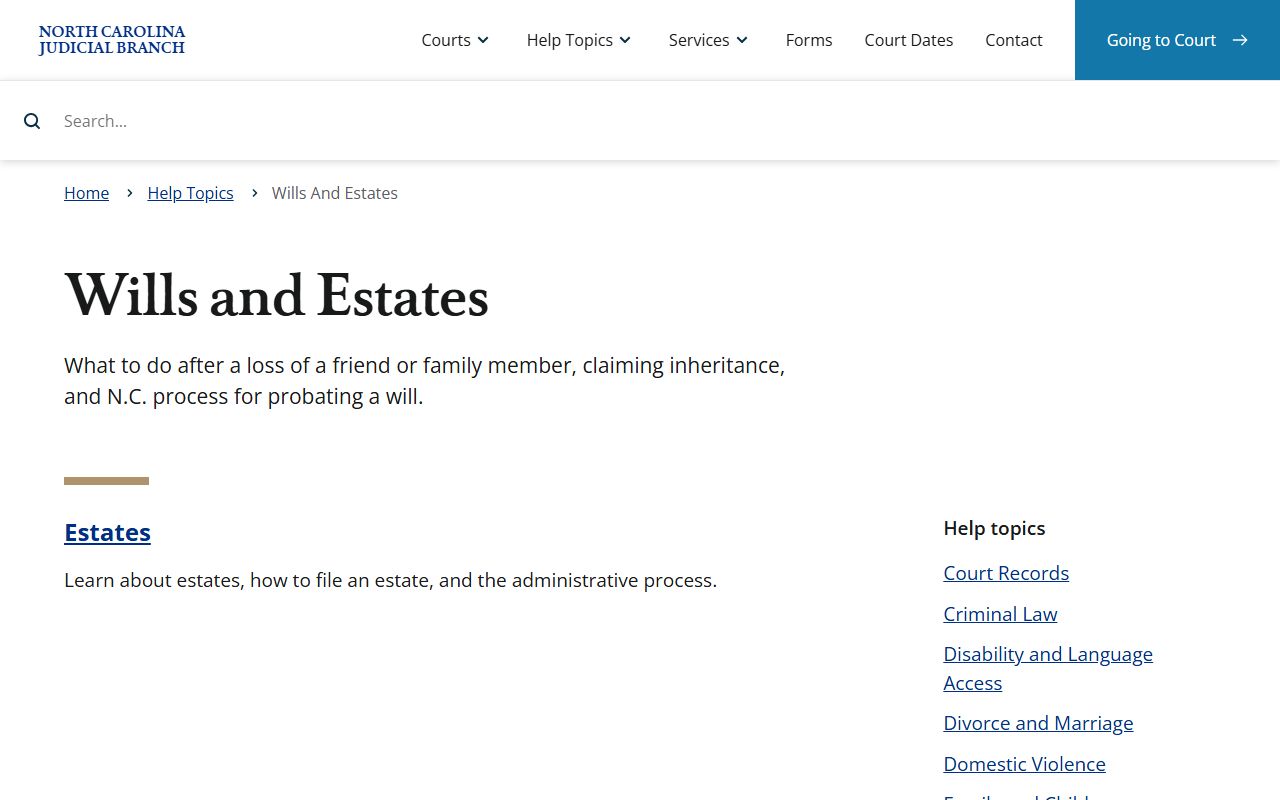
That state help topic supports the local Wilson County rule that probate filings route to the Clerk of Superior Court rather than a county-run probate office.
Wilson County Probate Terms
Estate files use terms that may not appear in ordinary civil court records. The definitions below are practical reading aids for Wilson County probate records, not legal advice. When a term affects filing rights, deadlines, or asset control, confirm the meaning with the Clerk of Superior Court, a lawyer, or the Judicial Branch estate forms.
- Testator
- The person who made a will before death.
- Executor
- The person named in a will to carry out estate duties after the clerk qualifies that person.
- Intestate
- A person died without a valid will, so estate authority may be through letters of administration.
- Guardianship
- A special proceeding for a person found incompetent or a minor who needs a legally appointed guardian.
- Conservatorship
- A term used in some states for financial protection; Wilson research documents North Carolina guardianship and incompetency proceedings instead.
Search Wilson County Probate Records
Wilson County probate record access has several channels. Portal Smart Search may show probate case information in eCourts counties. Search Hearings includes a hearing type for Probate or Mental Health and allows a Wilson County location filter. Public self-service terminals at clerk offices provide estates case information. Paper estate files are viewed at the Wilson clerk if the estate is located there. Certified and plain copies come from the clerk for a fee.
- Start with the decedent's full name, date of death, and any known estate file or case number.
- Use the North Carolina eCourts Portal Smart Search with Wilson County selected under location when searching case information.
- Use Portal Search Hearings and choose Wilson County with the Probate or Mental Health hearing type if a hearing date is the goal.
- Call Estates/Special Proceedings at (252) 206-3003 when the online result is unclear or when an older paper file is likely.
- Visit the Wilson County Courthouse for paper-file review or certified copies when the record is maintained locally.
Note: A living person's will deposited for safekeeping with a clerk should not be assumed to be a public estate file.
Wilson County Probate Contact
The local probate contact is the Estates/Special Proceedings section of the Clerk of Superior Court. This is the practical office for questions about opening an estate, reviewing an estate file, confirming copy fees, finding safekeeping wills, and checking whether a special proceeding is in the paper file. The clerk also manages civil and criminal records, so probate callers should ask for Estates/Special Proceedings to avoid being routed to the wrong counter.
Clerk of Superior Court as ex officio Judge of Probate
Wilson County Courthouse
115 E Nash St.
Wilson, NC 27894
Estates/Special Proceedings: (252) 206-3003
Main Clerk: (252) 206-3000
Mail: PO Box 1608, Wilson, NC 27894
The Judicial Branch estate administration page describes the clerk's role in issuing authority and overseeing estate steps.
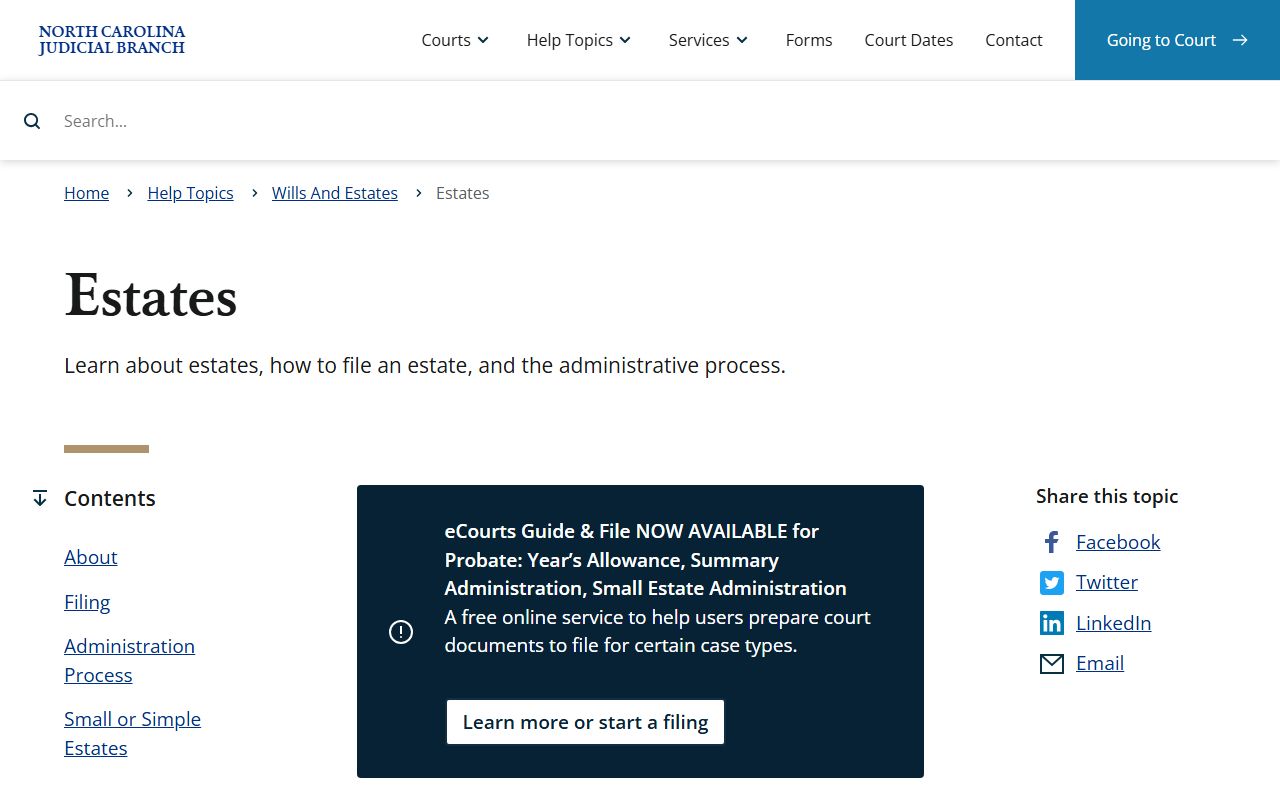
For Wilson County probate records, that state estate guidance works with the local Estates/Special Proceedings phone line and courthouse file access.
Open Wilson County Estate Files
Opening a formal estate administration generally requires the will, if there is one, a certified death certificate, an application or preliminary inventory, and the filing fee. The clerk or assistant clerk reviews the filing and issues letters or other authority if the requirements are met. Those letters allow the personal representative to obtain asset information, give notice, manage estate property, file inventories and accounts, pay debts, and distribute remaining property.
The estate process is fact-specific, but the Wilson County record path follows the state guidance. Find the will, obtain the death certificate, locate assets and debts, choose the proper AOC estate form, file with the clerk in the proper county, and comply with later inventory and accounting duties. If a will's validity is challenged, a caveat may be heard by a Superior Court judge rather than resolved only at the clerk counter.
| Estate step | Record produced or reviewed |
|---|---|
| Find the will | Will, codicil, or safekeeping-will inquiry |
| Open administration | Application, preliminary inventory, death certificate, and filing receipt |
| Clerk qualifies representative | Letters testamentary or letters of administration |
| Manage estate | Notices, inventories, accountings, and creditor materials |
| Contest validity | Caveat or related Superior Court record |
Wilson County Probate Fees
Probate costs come from statewide court-cost schedules and statutes, not from a separate Wilson County fee system. The research identifies the formal estate opening fee, estate administration cost components, gross-estate assessment, special estate filings, guardianship filing, sheriff service fee, and ordinary clerk copy fees. Confirm the current schedule before filing because Judicial Branch court costs can change.
| Item | Amount or rule |
|---|---|
| Open formal estate administration | $120 filing fee |
| Estate administration facilities fee | $10 component listed under G.S. 7A-307 |
| Estate administration technology fee | $4 component listed under G.S. 7A-307 |
| General Court of Justice estate fee | $106 component listed under G.S. 7A-307 |
| Gross estate assessment | $0.40 per $100 of gross estate, capped at $6,000 |
| Special estate filings | Several filings listed at $20 |
| Guardianship or incompetency petition | $120 plus $30 sheriff service fee for respondent |
| Clerk copies | $2 first page plus $0.25 each additional page |
| Certificate under seal | $3 |
Wilson County Probate Forms
Common probate forms are statewide AOC forms. The research identifies AOC-E-201 for probate or letters application, AOC-E-202 for letters of administration in intestate or no-executor matters, AOC-E-505 for inventory, and AOC-E-506 for estate account. AOC-E-201 fields include decedent, applicant, domicile, death date, will dates, heirs, qualification, and preliminary inventory details.
Guardianship and incompetency petitions are filed in the special proceedings division of the Clerk of Superior Court. State guidance says those petitions include the respondent's residence for the last 12 months, facts showing incompetence, reasons adjudication is sought, next of kin and interested contacts, assets, liabilities, income, and daily-life management ability. After personal service, the clerk appoints a guardian ad litem attorney, and the hearing is usually 10 to 30 days after service unless extended.
Restricted Wilson County Probate Records
Not every probate-adjacent record is open in the same way. N.C.G.S. 7A-109 makes clerk-maintained records open for inspection during regular office hours unless prohibited by law, but adoption, mental-health, juvenile, sealed, expunged, and protected personal data categories are not ordinary public records. Wilson County probate searches may also involve sensitive guardianship information that should be handled through the clerk's access rules.
The North Carolina mental health confidentiality statute is relevant when special proceedings overlap with involuntary commitment or mental-health records.
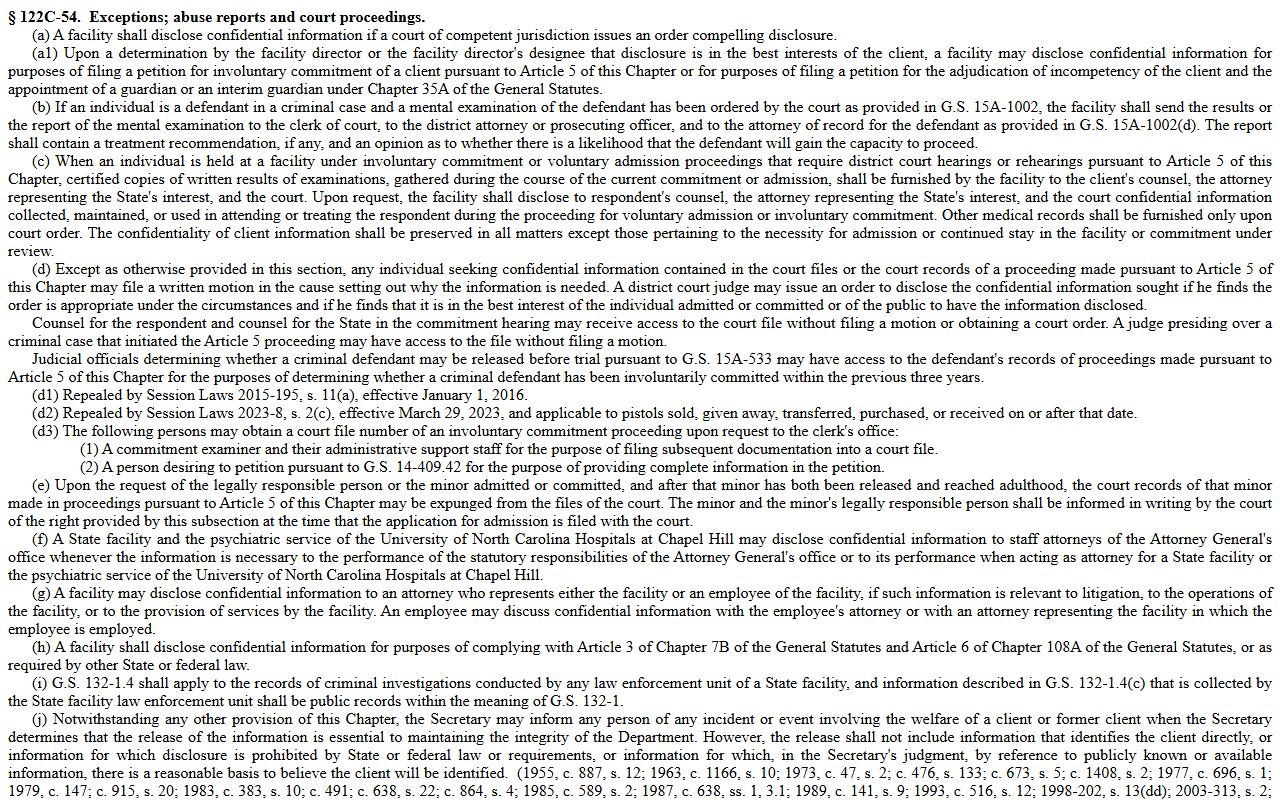
Mental-health confidentiality matters because Portal hearing types may group Probate or Mental Health, while public access to the underlying records can differ sharply.
The North Carolina adoption statutes provide another key limit on probate-adjacent public access.
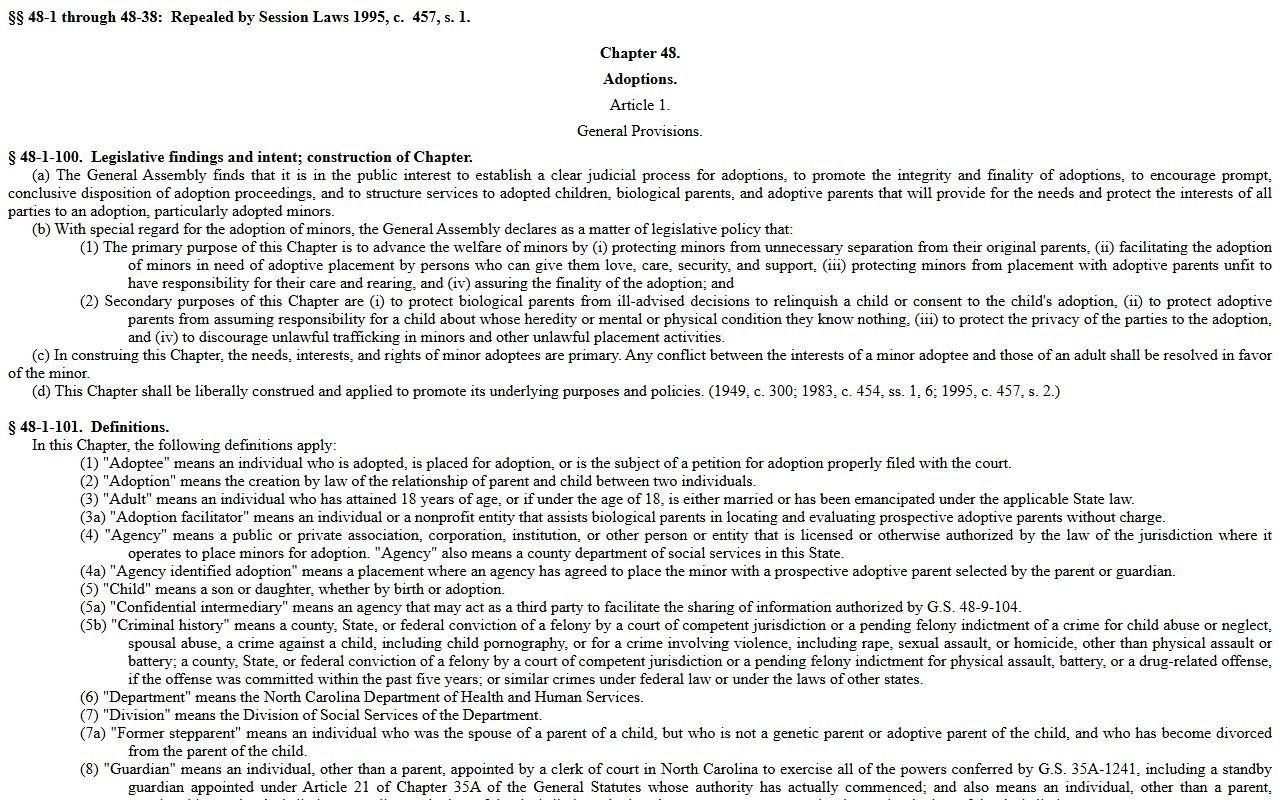
Adoption files should not be treated like estate inventories or letters, even when a name search in court systems suggests a related family matter exists.